

Glutathione and Skin: What the Research Shows
Glutathione is one of the most sought-after supplements for skin, particularly among people working toward a brighter, more even-looking complexion. That interest has two roots: glutathione is a powerful antioxidant, and it acts directly on the pathway that produces skin pigment. Both have been studied in controlled human trials. Here is what that research found, and why the form you take makes a difference to the result.
This article is educational and is not medical advice. These statements have not been evaluated by the Food and Drug Administration. This product is not intended to diagnose, treat, cure, or prevent any disease. Glutathione is not a treatment for any skin condition. For concerns about your skin, consult a qualified dermatologist or healthcare provider.
Why Glutathione Has a Skin Reputation
The interest starts with the biochemistry. Glutathione inhibits tyrosinase, the rate-limiting enzyme in melanin synthesis, by binding copper at the enzyme’s active site. Slow tyrosinase down and you slow pigment production at its source.
Glutathione also shifts the balance of what gets made, favoring lighter pheomelanin over darker eumelanin. Those two mechanisms are the reason researchers started running trials on it in the first place.
Our full breakdown of what glutathione is and what it does covers the fundamentals.
What the Research Shows
The clinical record on oral glutathione and skin appearance is more developed than most people assume.
A 2025 systematic review published in the International Journal of Dermatology pulled together the published trials on glutathione and skin pigmentation. Five randomized controlled trials and one open-arm study, using oral doses of 250 milligrams once daily, 250 milligrams twice daily, and 500 milligrams once daily, all reported a significant reduction in melanin index compared with placebo.
The individual trials add useful detail. Participants taking oral glutathione showed reduced melanin measurements in sun-exposed skin and in areas that get far less sun, which points to a systemic effect rather than a localized one.
Trials have also tracked outcomes beyond pigment, reporting improvements in:
● Skin brightness
● Skin elasticity
● Moisture levels
● The appearance of wrinkles
● Overall skin tone and texture
Taken together, that is a real body of human evidence behind glutathione as a skin-directed antioxidant, not just a mechanism on paper.
Why Oral Delivery Matters
How you take it changes what you get.
Oral supplementation raises glutathione throughout the body, and the trials above used exactly that route. Consistent daily dosing is what raised blood and cellular glutathione in the research, and consistency is what produced the skin results too.
Glutathione still has to survive digestion to get there, which is where absorption-focused formulations earn their place. Pairing glutathione with phospholipids protects it on the way through and gets more of each dose into circulation.
That makes formulation one of the more consequential decisions when you are choosing an oral glutathione supplement.
A Safety Note About IV Glutathione
Intravenous glutathione is sometimes promoted as a faster method for cosmetic skin lightening. However, IV administration is very different from taking a dietary supplement orally.
IV glutathione has been associated with serious adverse reactions and lacks standardized cosmetic dosing. It should not be viewed as a substitute for an oral glutathione supplement or used without appropriate medical supervision.
For skin support, an oral supplement is the route with the trial data behind it and the one you can actually keep up daily.
Antioxidant Support for Healthy Skin
Skin is regularly exposed to oxidative stress from sunlight, pollution, normal metabolism, and other environmental factors. Over time, these stressors can affect the appearance and function of skin cells.
Glutathione helps the body neutralize reactive compounds and supports its broader antioxidant network. This antioxidant role may help maintain healthy skin by supporting:
● Cellular defenses against oxidative stress
● Healthy skin structure
● Normal moisture and elasticity
● An even-looking complexion
● The body’s response to environmental stressors
That antioxidant role runs straight into how glutathione fits into healthy aging and oxidative stress.
If You Are Considering Glutathione
If you are after antioxidant defenses and healthy-looking skin, oral glutathione has the research behind it.
Absorption is the part that decides how much of it reaches you, which we cover in what happens to glutathione between the capsule and your bloodstream.
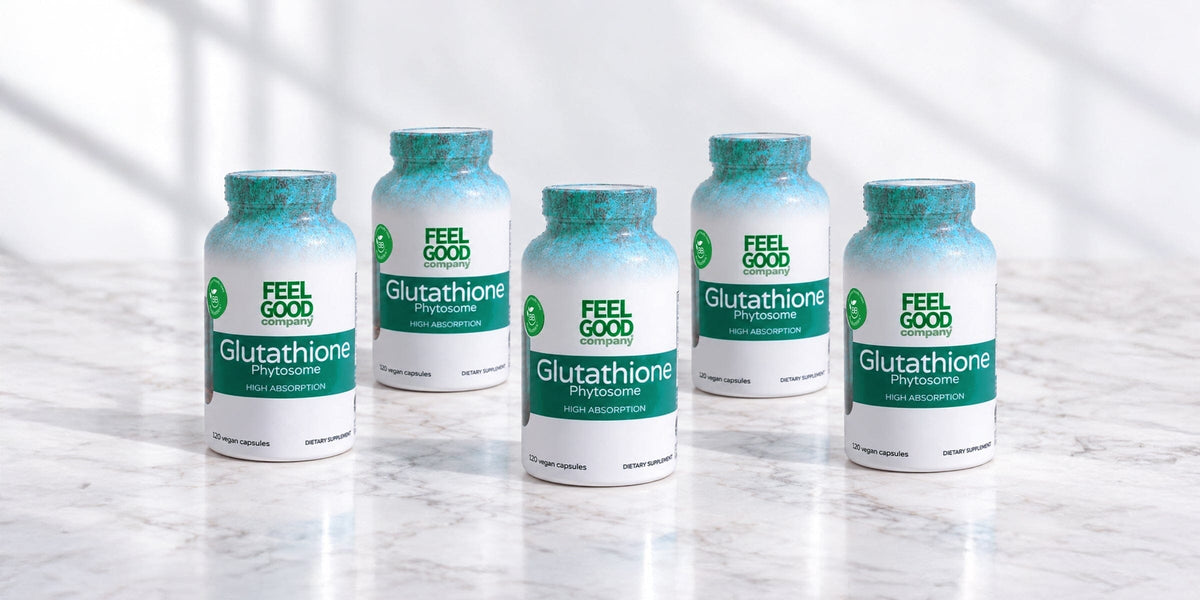
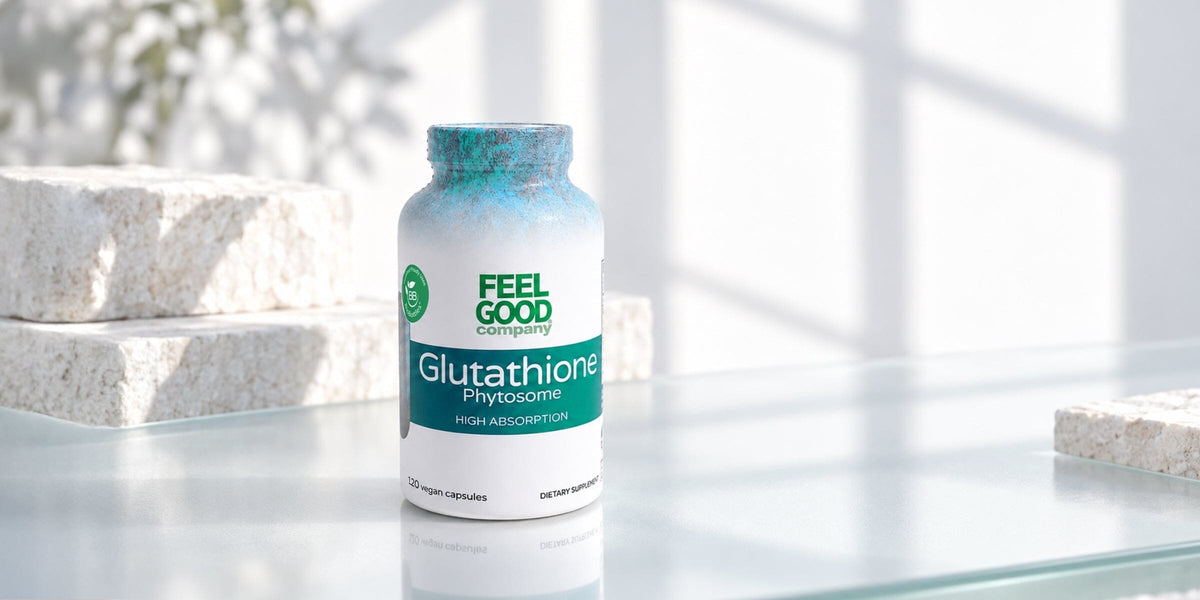
Our Glutathione Phytosome pairs glutathione with sunflower-derived phospholipids, so the delivery system is built into the molecule rather than left to chance in the gut.
That makes it a straightforward daily option for anyone building a routine around skin and antioxidant support.
The Bottom Line
The connection between glutathione and skin is backed by controlled human research.
Randomized controlled trials have measured significant reductions in melanin index with oral glutathione against placebo, and trials have reported gains in brightness, moisture, elasticity, wrinkle appearance, and overall skin texture.
Glutathione’s established antioxidant role also supports the body’s defenses against the oxidative stress that skin encounters every day.
Our Glutathione Phytosome delivers oral glutathione with a phospholipid system built for absorption, for anyone who wants to keep their glutathione levels, antioxidant defenses, and healthy-looking skin well supplied.
This article is for educational purposes only and is not a substitute for professional medical advice. Glutathione is not a treatment for any skin condition. These statements have not been evaluated by the Food and Drug Administration. This product is not intended to diagnose, treat, cure, or prevent any disease. Consult a dermatologist or healthcare provider for concerns about your skin, and do not use intravenous glutathione for cosmetic purposes without medical supervision.

Leave a comment
This site is protected by hCaptcha and the hCaptcha Privacy Policy and Terms of Service apply.