


Turmeric Curcumin for Joint Comfort and Mobility
Stiff knees on the stairs, a tight lower back after a long drive, shoulders that complain after a workout. Joint discomfort shows up in small moments long before it changes how you move. Turmeric curcumin for joint comfort has become one of turmeric's most popular uses for a simple reason: the human research is strong, and it points to steady, measurable gains in comfort and mobility.
The results depend on two things, getting enough curcumin into your body and taking it consistently. Both come down to choosing the right form.
How Turmeric Curcumin Supports Your Joints
Every joint lives under constant load. Walking, lifting, and training create everyday wear, and the body answers with an inflammatory response that clears damage and starts repair. When that response runs longer than it needs to, joints feel stiff and less comfortable.
Curcumin, the active compound in turmeric, works on that response at the cellular level. A review of the human research in Foods attributes most of curcumin's benefits to its anti-inflammatory and antioxidant effects, and lists arthritis and exercise-related soreness among the areas where it helps. By supporting a balanced inflammatory response and protecting joint tissue from oxidative stress, turmeric curcumin helps joints stay comfortable through the demands of daily life.
What the Research Shows
Curcumin and joint health is one of the most thoroughly studied areas in supplement research, and the findings line up across dozens of trials.
The broadest view comes from a 2024 umbrella review in Phytotherapy Research that pooled 11 meta-analyses of randomized controlled trials in adults with knee osteoarthritis. Curcumin significantly improved scores for discomfort, stiffness, and physical function, and the authors concluded the evidence strongly supports curcuminoids for joint comfort, mobility, and stiffness.
The phytosome form has its own clinical record. In a three-month study of 50 adults, a curcumin phytosome providing 200 mg of curcumin a day improved joint comfort scores, treadmill walking distance, and levels of C-reactive protein, a marker of inflammation. A follow-up eight-month study of 100 adults confirmed significant gains in both clinical and biochemical measures compared with the control group, with excellent tolerability over the full eight months.
Why the Form Matters for Joints
Many joint studies with plain curcumin use doses above 1,000 mg a day. A meta-analysis of ten randomized trials found the strongest results at those higher intakes, which fits a compound the body absorbs so poorly in its standard form.
The phytosome trials took a different route. They delivered just 200 mg of curcumin a day and still produced significant gains in comfort and mobility. The reason is absorption: in a human crossover study, the phytosome form delivered about 29 times more total curcuminoids to the blood than standard curcumin.
A form that absorbs efficiently means a manageable daily dose and fewer capsules, which makes it easier to stay consistent. The trade-offs between turmeric phytosome, black pepper, and liposomal forms come down to exactly this kind of efficiency, and it is why our turmeric curcumin phytosome is built on phytosome delivery.
How Long It Takes to Notice a Difference
Curcumin builds its effect through steady daily use. The phytosome trials measured results at three months and again at eight months, and the gains held across the full eight months of supplementation.
Give curcumin at least several weeks of consistent use before you judge it. A simple way to track progress is to pick two or three moments that reveal how your joints feel, such as the first steps out of bed, a flight of stairs, or the morning after a hard workout, and check in on them every couple of weeks.
Consistency matters more than timing to the minute. Taking turmeric curcumin with a meal at the same point each day makes the habit stick and supports absorption, and the details of building a daily turmeric routine make that easy to get right.
Building a Joint-Friendly Routine Around Turmeric
Curcumin works best as one part of a routine that keeps joints moving and well supported.
-
Keep moving. Regular low-impact activity such as walking, cycling, and swimming keeps joints mobile, and strength work builds the muscle that supports them.
-
Recover well. Hard sessions put extra demand on joints and the tissues around them, and turmeric's role in post-workout recovery makes it a natural fit for active routines.
-
Pair it thoughtfully. Turmeric combines well with other joint-focused nutrients such as omega-3s and collagen, which is why it anchors several formulas in our joint and mobility collection.
-
Take it with food. Curcumin is fat-soluble, so a meal improves both absorption and comfort.
Curcumin is well tolerated by most adults. Check with your healthcare provider first if you take blood thinners or medications processed by the liver, have gallbladder or liver concerns, or are pregnant or nursing.
Comfortable Movement Starts With Absorption
The research on curcumin and joints is consistent: steady daily use supports comfort, mobility, and flexibility, and a well-absorbed form gets there at a modest dose.
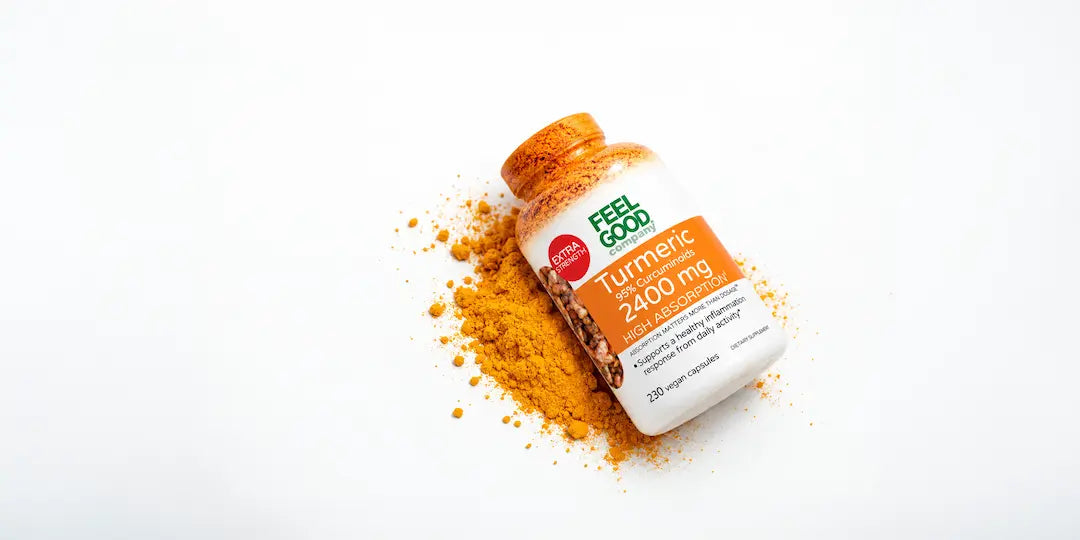
That is the idea behind our turmeric phytosome: curcumin bound to phospholipids for efficient absorption, with no black pepper extract, in a capsule that fits easily into your day. Joints are only part of the story, too, since curcumin also supports recovery, inflammatory balance, and bone strength.

Leave a comment
This site is protected by hCaptcha and the hCaptcha Privacy Policy and Terms of Service apply.