

Article: Turmeric vs. Curcumin: What's the Difference?
Turmeric vs. Curcumin: What's the Difference?
Turmeric and curcumin show up side by side on supplement labels, in headlines, and in research, often as if they were the same thing. They are closely related, but they are not interchangeable. Turmeric is the plant. Curcumin is the compound inside it that does most of the work.
Understanding the difference between turmeric and curcumin is the key to choosing a supplement that delivers what the research promises.
What Turmeric Is
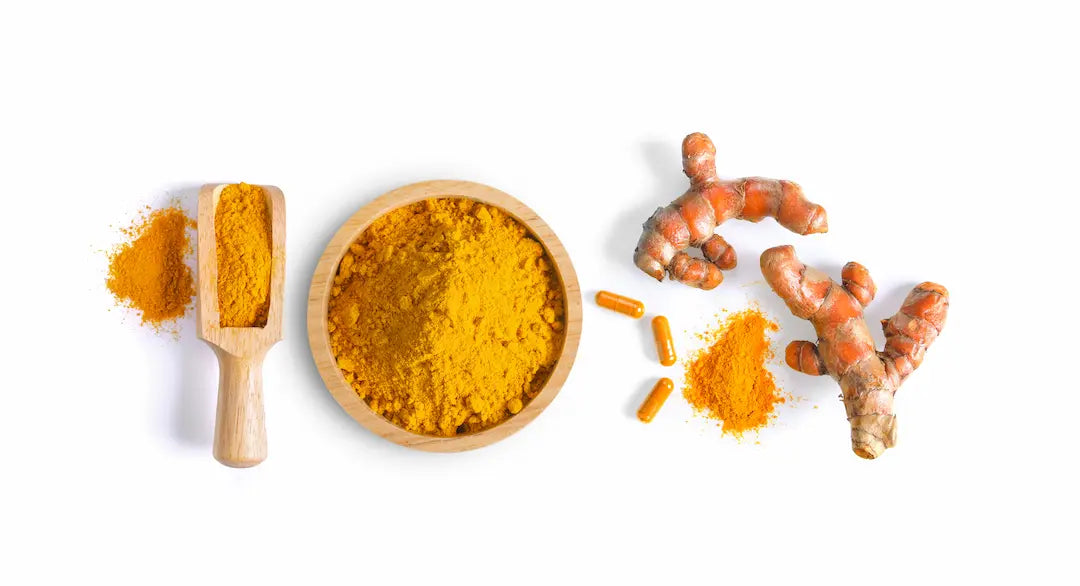
Turmeric is the root of Curcuma longa, a leafy plant in the ginger family. The root, technically a rhizome, is boiled, dried, and ground into the bright golden powder found in curry blends, mustards, and golden milk.
Turmeric is a complex mix of compounds. Alongside its color-giving curcuminoids, the root contains aromatic oils, fiber, starch, and small amounts of other plant compounds. That full mix is what gives turmeric its earthy, slightly bitter flavor and its long history in traditional cooking and wellness practices.
What Curcumin Is
Curcumin is the most abundant member of a group of compounds called curcuminoids, which give turmeric its golden color. The group has three members: curcumin, demethoxycurcumin, and bisdemethoxycurcumin. Supplement labels and research papers often use "curcumin" as shorthand for all three.
Curcuminoids are a small slice of the root. Lab analysis of commercial turmeric found total curcuminoids between roughly 2% and 9% by weight, depending on the variety.
Curcumin is also where the research lives. A review of the human evidence in Foods traces most of turmeric's benefits to curcumin's antioxidant and anti-inflammatory activity. When a study reports results for joint comfort, recovery, or a balanced inflammatory response, it is almost always testing curcumin or a curcumin-rich turmeric extract.
Turmeric Spice vs. Turmeric Supplements
Because curcuminoids make up only a few percent of the root, the turmeric in your spice rack delivers a small amount of curcumin per spoonful. Supplements solve that in two steps.
|
Turmeric spice |
Standard turmeric extract |
Enhanced turmeric curcumin |
|
|---|---|---|---|
|
What it is |
Ground whole root |
Root extract concentrated for curcuminoids |
Extract paired with a delivery system |
|
Curcumin content |
A few percent |
Often standardized to 95% curcuminoids |
Concentrated, with a stated amount |
|
Absorption |
Low |
Still low without help |
Significantly improved |
|
Best use |
Cooking and flavor |
Basic supplementation |
Daily supplementation for results |
The first step is concentration. Extracts pull curcuminoids out of the root so a capsule holds far more than a spoonful of spice. The second step is absorption, and it is where the real difference shows up. Curcumin on its own is poorly absorbed, so delivery systems such as phytosome bind it to phospholipids. In a human crossover study, a curcumin phytosome delivered about 29 times more total curcuminoids to the blood than a standard curcuminoid mixture.
The differences between turmeric phytosome, black pepper, and liposomal forms come down to how each one tackles that absorption step.
Which One Should You Take?
The answer is both, in the right form. Turmeric is the source, and curcumin is the active compound you want from it. The best supplements start with turmeric root extract, concentrate its curcumin, and pair it with a delivery system that gets that curcumin into your body.
That is why so many quality supplements are labeled turmeric curcumin. Keep cooking with turmeric for flavor and color, and rely on a well-absorbed turmeric curcumin supplement for benefits such as comfortable, mobile joints and faster recovery after hard training. Taking it daily with a meal completes the picture.
The Best of Both
Turmeric gives you the source, and curcumin gives you the results. A supplement that brings the two together, with a delivery system that solves absorption, is the most direct way to get what the research describes.
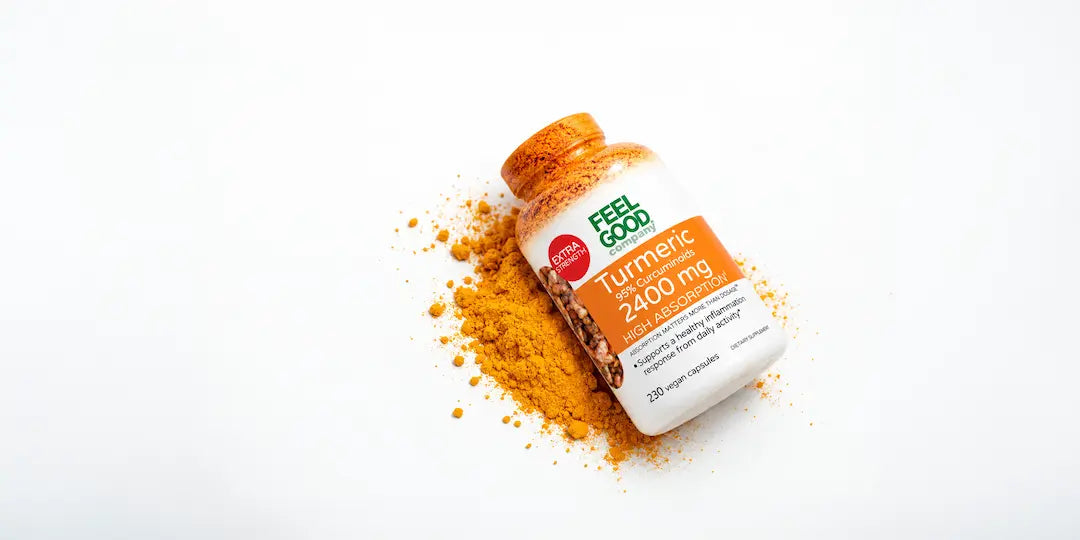
That is the idea behind our turmeric curcumin phytosome: turmeric root extract with curcumin bound to phospholipids for efficient absorption, and no black pepper extract. For a deeper look at everything turmeric curcumin supports, from joints to bone strength, the full picture is worth exploring.


Leave a comment
This site is protected by hCaptcha and the hCaptcha Privacy Policy and Terms of Service apply.