

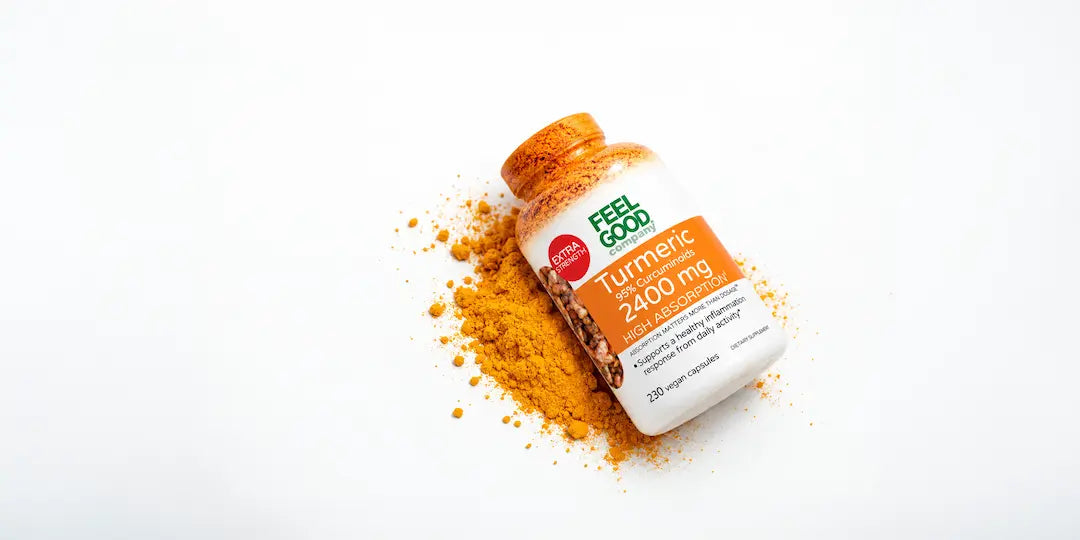
The Complete Guide to Turmeric and Curcumin: Benefits, Absorption, and How to Choose
Turmeric has been a kitchen staple and a traditional wellness herb for centuries, and curcumin, its most active compound, is now one of the most studied plant compounds in nutrition science. Interest in turmeric and curcumin keeps growing because the research keeps pointing in the same direction: support for joint comfort, recovery, and a balanced inflammatory response.
The catch is the form. Standard turmeric and curcumin powders are poorly absorbed, so two supplements with the same milligrams on the label can deliver very different amounts to your body. That is why we built our formula around phytosome delivery instead of relying on high doses of a compound the body struggles to use.
What Turmeric Is and Where Curcumin Comes In
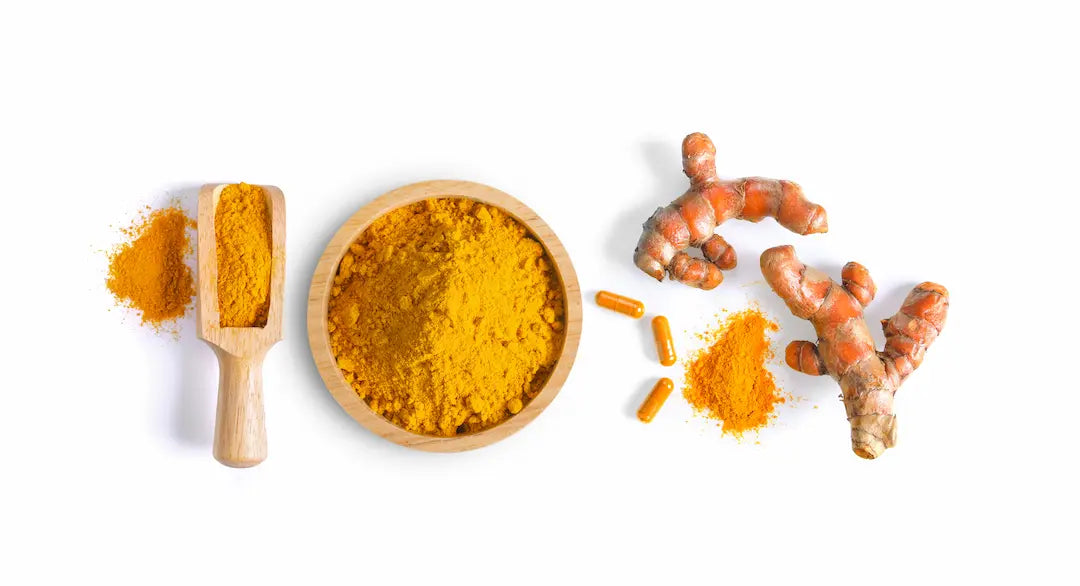
Turmeric is the dried, ground root of Curcuma longa, a plant in the ginger family. Its golden color comes from a group of compounds called curcuminoids: curcumin, demethoxycurcumin, and bisdemethoxycurcumin. Curcumin is the most abundant and the most studied of the three.
Curcuminoids make up only a small share of the root itself. Lab analysis of commercial turmeric varieties found total curcuminoids between roughly 2% and 9% by weight. The rest is fiber, starch, and aromatic oils.
That ratio explains why a sprinkle of the spice and a curcumin supplement are not interchangeable. Cooking with turmeric adds flavor and color, while a supplement concentrates the active compound into a dose you can actually measure. The distinction between the spice and its active compound is the first thing worth understanding before comparing products.
Why Turmeric and Curcumin Absorption Is the Deciding Factor
Curcumin is fat-soluble and dissolves poorly in water, and the body breaks it down quickly once it is absorbed. Plain turmeric and curcumin powders lose most of their active compound before it reaches circulation. That makes the delivery system the single most important feature on the label.
Phytosome technology solves this by binding curcumin to phosphatidylcholine, a phospholipid that makes up the membranes of your own cells. The phospholipid acts as a carrier, helping curcumin move through the watery environment of the gut and across the intestinal wall. In a randomized, double-blind, crossover human study, a curcumin phytosome produced total curcuminoid absorption about 29 times higher than an unformulated curcuminoid mixture, even though the phytosome doses contained far fewer curcuminoids.
This is why we use a phytosome form in our turmeric curcumin phytosome. More of what you take reaches your body, so the dose works harder. You can see how we apply the same approach across our formulas on our absorption technologies page.
Phytosome is not the only way to improve absorption. Black pepper extract (piperine) is the most common alternative, and it works differently: it slows the enzymes that clear curcumin from the body. Those same enzymes, including CYP3A4 and P-glycoprotein, also process many prescription medications, which is why our turmeric capsule formula relies on phytosome delivery instead. Liposomal turmeric and plain extracts round out the field, and the trade-offs between turmeric delivery methods come down to how each one gets curcumin into circulation and who it suits best.
Joint Comfort and Mobility
Joint comfort is where curcumin phytosome has its deepest clinical record. In a three-month study of 50 adults, a curcumin phytosome providing 200 mg of curcumin a day improved joint comfort scores, treadmill walking distance, and inflammatory markers.
Researchers then ran a longer eight-month study with 100 participants. The phytosome group again showed significant gains in both comfort and mobility measures compared with the control group, and the supplement was well tolerated over the full eight months. Both trials enrolled adults with osteoarthritis, and both used a modest daily dose. That detail matters: when absorption is solved, curcumin does not need megadoses to deliver results.
The wider body of research agrees. A 2024 umbrella review in Phytotherapy Research pooled 11 meta-analyses of randomized trials and found that curcumin significantly improved scores for joint comfort, stiffness, and physical function.
For active adults, that translates into easier movement through daily routines, training, and the stiffness that tends to build with age. The research on turmeric curcumin and joint mobility also shows why consistent daily use matters more than any single dose. Turmeric pairs well with the other ingredients in our joint and mobility formulas.
Exercise Recovery
Hard training creates small amounts of muscle damage and the soreness that peaks a day or two later. Curcumin supports the body's response to that stress, which is why it has become a staple in recovery routines.
The phytosome form has been tested directly. In a randomized, placebo-controlled trial published in the Journal of the International Society of Sports Nutrition, 20 moderately active men took curcumin phytosome before and after a strenuous downhill run. The curcumin group reported less soreness in the front of the thighs than the placebo group in the days that followed.
Other curcumin research points the same way. A study from the Australian Institute of Sport and Massey University found moderate to large reductions in post-exercise soreness, along with lower blood markers of muscle damage, after heavy leg-press training.
Faster recovery means you can return to training sooner and train harder when you do. Both trials started curcumin before the workout, so timing turmeric curcumin around your training is a simple way to get more from it. The rest of our athletic performance lineup rounds out a hard training block.
A Balanced Inflammatory Response and Antioxidant Support
Most of what curcumin does traces back to two actions: it supports a balanced inflammatory response, and it helps protect cells from everyday oxidative stress. A review of the human research published in Foods identified these antioxidant and anti-inflammatory effects as the primary mechanisms behind curcumin's benefits, and noted that a relatively low dose can benefit people without diagnosed health conditions.
Inflammation is a normal, useful process. It is how the body responds to training, minor injuries, and daily wear. Problems start when that response stays switched on longer than it should, and that is where curcumin helps keep the system in balance. It works at the cellular level on several of the signaling molecules that regulate the inflammatory response.
On the antioxidant side, curcumin neutralizes free radicals directly and supports the body's own antioxidant defenses. The same review links these effects to support for recovery and performance in active people.
Because inflammatory balance underpins so much of the research, the mechanics of turmeric curcumin and inflammatory balance explain why turmeric shows up in so many areas of health. It also anchors several formulas in our inflammatory balance collection.
Other Areas Curcumin Supports
Because curcumin works through such basic cellular mechanisms, its benefits reach well beyond joints and recovery.
Bone Strength
Bone health depends on exercise, calcium, and vitamin D, and curcumin adds to that foundation. In a 24-week study of 57 healthy adults with low bone density, participants who added a curcumin phytosome to their standard bone-health routine showed significant gains in bone density, while the group following the routine alone showed no significant change.
Cognitive Clarity and Mood
A randomized, placebo-controlled trial in healthy adults aged 60 to 85 found that a highly absorbable curcumin formulation improved attention and working memory within an hour of the first dose. After four weeks, participants also had better working memory, less fatigue, and steadier mood under stress than the placebo group.
Metabolic and Vascular Wellness
Healthy blood vessels depend on nitric oxide, which helps arteries relax and widen. In a 12-week trial of healthy men and postmenopausal women aged 45 to 74, curcumin increased resistance artery function by 37% and conduit artery dilation by 36%, by raising nitric oxide availability and lowering oxidative stress.
How to Choose a Curcumin Supplement
The milligrams on the front of the bottle tell you less than the delivery system on the back. Use these five checks to compare products.
-
Look for a named delivery system. Phytosome, liposomal, and black pepper extract all improve absorption. A label that lists only "turmeric root powder" with no delivery system is mostly spice.
-
Check the curcuminoid content. Standardized extracts state how much of the dose is curcuminoids. That number, combined with the delivery form, is what reaches your body.
-
Match the formula to your medications. If you take prescription drugs, a phytosome form avoids the enzyme effects that come with black pepper extract.
-
Take it with a meal. Curcumin is fat-soluble, so food improves absorption and comfort.
-
Choose clean, tested ingredients. Vegan capsules, no unnecessary fillers, and a brand that explains its science openly.
Turmeric curcumin is well tolerated by most adults. Check with your healthcare provider first if you take blood thinners or medications processed by the liver, have gallbladder or liver concerns, or are pregnant or nursing. Most people pause turmeric supplements one to two weeks before a scheduled surgery. Beyond that, a consistent turmeric routine built around meals is the simplest way to get steady results.
Getting More From Every Dose
Turmeric's reputation comes from curcumin, and curcumin's results come from absorption. Joint comfort, faster recovery, inflammatory balance, and the rest all depend on getting enough of the compound into circulation, consistently, day after day.
That is the standard we built our phytosome turmeric formula to meet: curcumin bound to phospholipids for efficient absorption, with no black pepper extract, in capsules that fit easily into a daily routine. If you are not sure where curcumin fits among your health priorities, our HolistiCheck at-home test is a good place to start.


Leave a comment
This site is protected by hCaptcha and the hCaptcha Privacy Policy and Terms of Service apply.