

The Complete Guide to Creatine: Benefits, Forms, Dosing, and Who Should Take It
Creatine is one of the most studied supplements in all of sports nutrition, and also one of the most misunderstood. Plenty of people picture it as something only competitive bodybuilders use, when the research actually points to a much broader set of potential benefits across many stages of life. This guide walks through what creatine is, what it does inside your body, the different forms available, how to take it, and who tends to benefit most, with links to the primary research throughout so you can read the evidence yourself.
This article is educational and is not medical advice. These statements have not been evaluated by the Food and Drug Administration. This product is not intended to diagnose, treat, cure, or prevent any disease. If you are pregnant, nursing, managing a health condition, or taking medication, talk with your healthcare provider before starting any supplement.
What Creatine Actually Is
Creatine is a compound your body already makes. It is produced in the liver and kidneys from three amino acids (arginine, glycine, and methionine), and you also get it from foods like red meat and fish. Most of the creatine in your body is stored in your muscles as phosphocreatine, where it plays a central role in producing quick energy.
Because creatine occurs naturally in the body and the diet, supplementation is essentially a way of topping up those stores beyond what food alone typically provides. According to the International Society of Sports Nutrition position stand on creatine, studies have consistently shown that supplementation raises the creatine concentration inside muscle, which is the mechanism behind most of its benefits.
How Creatine Works in the Body
During short, intense efforts (a heavy lift, a sprint, a hard set of anything), your muscles rely on a molecule called ATP for immediate energy. ATP runs out fast. Phosphocreatine helps regenerate ATP quickly, which is why having more creatine stored in muscle can support more total work before fatigue sets in.
The simplest way to think about it: creatine does not give you energy directly, it helps you replenish your own energy faster between efforts. Over weeks of consistent training, that can translate into doing slightly more work per session, which is what drives results over time.
The Benefits of Creatine
The evidence base for creatine is unusually deep. The clearest, most consistent findings relate to strength and exercise performance, while other areas are promising but still developing.
Strength, Power, and Exercise Performance
This is the most established benefit. The ISSN position stand describes creatine monohydrate as the most effective nutritional supplement currently available for increasing high-intensity exercise capacity and lean body mass during training. We cover the practical side of this in our walkthrough of what creatine really does for your body.
Muscle Preservation With Age
Creatine is not only for younger athletes. A meta-analysis of randomized controlled trials in older adults found that creatine combined with resistance training increased lean tissue mass and both upper and lower body strength compared with resistance training alone. Because age-related muscle loss affects mobility and independence, this is one of the more meaningful findings for the general population, and we go deeper in our guide to creatine for adults over 50.
Cognitive Function
There is growing interest in creatine and the brain, since the brain is metabolically demanding and creatine plays a role in its energy supply. The current evidence is genuinely mixed. A systematic review and meta-analysis on memory found a modest improvement, with a notably larger effect in older adults than younger ones. However, broader measures of cognition have been less consistent. We unpack what the research does and does not support in our article on creatine and brain health.
The Different Forms of Creatine
Walk down any supplement aisle and you will see several versions of creatine. Here is how the main ones compare.
Creatine Monohydrate
The original and by far the most researched form. When studies refer to "creatine," they almost always mean monohydrate. It is effective, inexpensive, and has an excellent safety record. Its main downsides for some users are that it can cause mild water retention or digestive discomfort, and it is less soluble in water than newer forms.
Creatine Hydrochloride (HCl)
Creatine HCl is bound to hydrochloric acid, which makes it considerably more soluble. People who experience bloating or stomach upset with monohydrate sometimes find HCl more comfortable. It is worth being honest here: monohydrate has far more direct performance research behind it, and HCl's advantages are mainly about solubility and digestive comfort rather than proven superior results. We compare the two head to head in creatine HCl versus monohydrate, and dig into the HCl-specific research in our overview of what the research suggests about creatine HCl.
Other Forms
You may also encounter creatine ethyl ester, buffered creatine, and liquid creatine, among others. None has accumulated the evidence base of monohydrate, and several have performed no better (or worse) in head-to-head studies. For most people, the realistic choice is between monohydrate and HCl.
How to Take Creatine
Dosing and the Loading Question
The traditional approach uses a "loading phase," around 20 grams per day split into smaller doses for five to seven days, followed by a maintenance dose of roughly 3 to 5 grams per day. The loading phase saturates muscle stores faster. The thing many people do not realize is that loading is optional. Taking a steady maintenance dose every day reaches the same saturation point, just over a few weeks instead of a few days. We explain the tradeoffs in our breakdown of whether you actually need a loading phase.
Timing
Timing matters far less than consistency. Taking creatine around your workout may offer a small edge, but the most important factor is taking it every day so your muscle stores stay topped up. Pick a time you will remember and stick with it.
Powder or Capsules
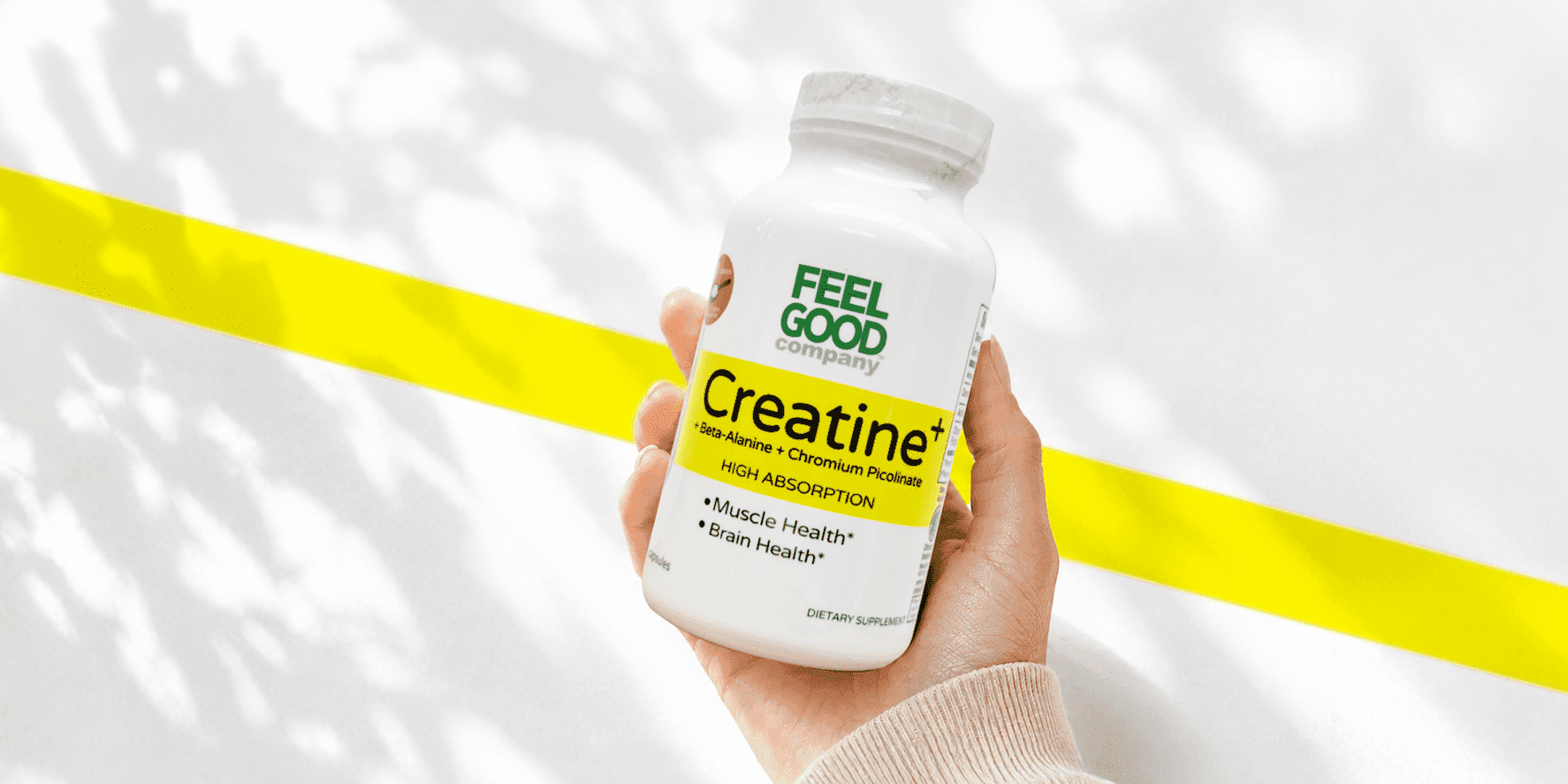
Creatine comes as both powder and capsules, and the active ingredient is the same. Powder is usually cheaper per gram and easy to add to a shake, while capsules are more convenient, more portable, and remove the need to measure and mix. If powders have been the thing stopping you from staying consistent, capsules can solve that problem. We weigh both options in capsules versus powder. For example, FEELGOOD Company's Creatine HCl capsules deliver a daily serving in two capsules with no loading phase required, which is one capsule-based HCl option among several on the market.
Who Should Consider Creatine
-
People doing resistance or high-intensity training, who want to support strength and training capacity.
-
Older adults, especially when paired with resistance training, for muscle and strength preservation.
-
Women, who often avoid creatine due to myths about bulk or bloating that the research does not support. We address these directly in creatine for women.
-
Vegetarians and vegans, who tend to have lower baseline creatine stores because dietary creatine comes mainly from meat and fish.
Creatine works best alongside training. Taking it without any exercise stimulus offers far less benefit, because the muscle adaptations it supports depend on the training itself.
Is Creatine Safe?
Creatine is among the most thoroughly studied supplement ingredients, and the ISSN position stand reports that short and long-term use has been well tolerated in healthy people across a wide range of ages. The common worries about kidney damage or dehydration have not been borne out in healthy individuals in the research. That said, safety in the general population does not replace individual medical guidance. If you have kidney issues, another medical condition, or take medication, check with your healthcare provider first.
Stacking Creatine With Other Ingredients
Creatine is often combined with complementary ingredients. Beta-alanine, for instance, works through a different mechanism (buffering acid build-up in muscle) and is frequently paired with creatine for that reason.
The Bottom Line
Creatine is effective, well researched, affordable, and safe for most healthy adults. Its strongest evidence is for strength and high-intensity performance, with encouraging signs for muscle preservation in older adults and more preliminary findings around cognition. For most people the practical decision comes down to form (monohydrate or HCl), format (powder or capsules), and above all consistency. Whichever you choose, taking it daily alongside training is what makes the difference.
This article is for educational purposes only and is not a substitute for professional medical advice. These statements have not been evaluated by the Food and Drug Administration. This product is not intended to diagnose, treat, cure, or prevent any disease. Consult your healthcare provider before beginning any new supplement, particularly if you are pregnant, nursing, taking medication, or managing a health condition.



Leave a comment
This site is protected by hCaptcha and the hCaptcha Privacy Policy and Terms of Service apply.