

Creatine for Women: Myths, Benefits, and What to Expect
Creatine is one of the most researched supplements available, yet it remains surrounded by myths that keep many women from considering it. The biggest one is the fear that creatine will make you bulky or bloated. The research does not support that worry, and in fact points to several reasons creatine may be worth a look for women at different stages of life. This article separates the myths from the evidence, explains what women can realistically expect, and notes where you should bring questions to your healthcare provider rather than a supplement label.
This article is educational and is not medical advice. These statements have not been evaluated by the Food and Drug Administration. This product is not intended to diagnose, treat, cure, or prevent any disease. If you are pregnant, nursing, managing a health condition, or taking medication, talk with your healthcare provider before starting any supplement.
Why Women Are Often Told to Skip Creatine
For most of its history, creatine has been marketed to male athletes. That framing, more than any scientific reason, is why so many women assume it is not for them. Layered on top of the marketing are a few persistent myths: that creatine causes bulk, that it leads to bloating and water retention, and that it is somehow a "men's" supplement. None of these hold up well against the research. It is worth understanding where these ideas come from and what the evidence actually says. If you want the broader picture of how creatine works, our complete guide to creatine covers the fundamentals.
The Myths, Examined
Myth: Creatine Makes Women Bulky
Building noticeable muscle bulk is difficult, requires sustained heavy training and a calorie surplus, and is influenced heavily by hormones. Creatine does not contain hormones and does not independently build muscle. What it does is support the work you do in training. A lifespan review of creatine in women's health describes improvements in strength and exercise capacity when creatine is combined with training, which is about performance and tone, not unwanted size.
Myth: Creatine Causes Bloating and Water Retention
This is the myth most worth correcting, because there is a real mechanism people are misunderstanding. Creatine does draw water, but it draws it inside the muscle cell, which is called intracellular water. The bloating people fear is extracellular, the puffy water sitting under the skin. The same lifespan review explains that the intracellular increase from creatine should not be confused with the extracellular water retention associated with bloating, and notes there is no demonstrated meaningful increase in body mass for women from creatine across the menstrual cycle. In other words, the "water weight" worry is largely a misunderstanding of where the water actually goes.
Myth: Creatine Is a Men's Supplement
There are real physiological differences in how women and men store and use creatine. Research has noted that women tend to have lower baseline creatine stores and lower dietary creatine intake on average, since dietary creatine comes mostly from meat and fish. If anything, that is a reason creatine may be relevant for women, not a reason to skip it.
What the Evidence Actually Supports
Strength and Performance
The clearest benefit, as with men, is support for strength and high-intensity exercise when paired with training. A meta-analysis of creatine and resistance training in older women found that creatine combined with resistance training improved muscle strength, with effects that were more pronounced when the training program ran for a longer duration. The consistent theme across the research is that creatine amplifies training, so the exercise has to be there for the supplement to help.
Body Composition and Healthy Aging
Creatine's role in supporting lean muscle becomes especially relevant later in life. Women lose muscle and experience changes in bone health around and after menopause, and resistance training is the most effective tool to counter that decline. If you are over 50, our dedicated guide to creatine for adults over 50 goes deeper into the aging-specific evidence, including the honest picture on bone health, where the findings are mixed.
Where to Talk to Your Doctor, Not a Label
Some of the most discussed areas of creatine research in women, including pregnancy, hormonal health, and mood, are genuinely interesting in early research but are exactly the areas where you should rely on your healthcare provider rather than a supplement article. These touch on medical questions that depend on your individual situation. If you are pregnant, trying to conceive, nursing, or considering creatine for anything beyond exercise support, that is a conversation to have with a qualified professional.
What to Expect and How to Take It
If you start creatine alongside a training routine, here is a realistic picture.
The Timeline
Some people notice improved workout energy within the first week or two. The strength and body-composition benefits build gradually over several weeks of consistent use combined with training. Creatine is not a stimulant and is not something you feel kick in like caffeine. Its effects accumulate quietly.
Dosing and Format
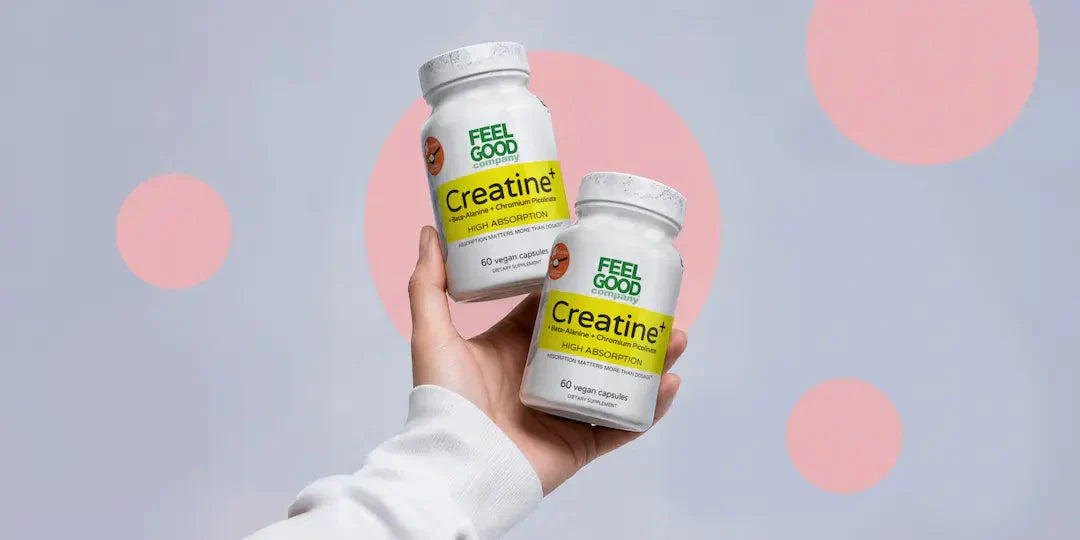
A steady daily dose of roughly 3 to 5 grams is effective, and a loading phase is optional rather than necessary. We explain that fully in our look at whether you need a loading phase. Creatine comes as powder or capsules. If the idea of measuring and mixing a powder is a barrier, capsules make daily consistency simpler. The creatine HCl form is more soluble and some women find it gentler on digestion, which we compare in creatine HCl versus monohydrate. As one example, FEELGOOD Company's Creatine HCl capsules provide a daily serving in two capsules with no loading required, which is one straightforward capsule-based option.
The Bottom Line
The fears that keep many women away from creatine, bulk and bloating, do not hold up against the research. Creatine does not contain hormones, does not independently build size, and the "water weight" concern is mostly a misunderstanding of where the water goes. What the evidence does support is meaningful: support for strength and performance when combined with training, and a potentially useful role in maintaining lean muscle through aging. For genuinely medical questions around pregnancy, hormones, or mood, bring those to your healthcare provider. But as a well-studied addition to a training routine, creatine is just as relevant for women as for anyone.
This article is for educational purposes only and is not a substitute for professional medical advice. These statements have not been evaluated by the Food and Drug Administration. This product is not intended to diagnose, treat, cure, or prevent any disease. Consult your healthcare provider before beginning any new supplement, particularly if you are pregnant, nursing, trying to conceive, taking medication, or managing a health condition.



Leave a comment
This site is protected by hCaptcha and the hCaptcha Privacy Policy and Terms of Service apply.