

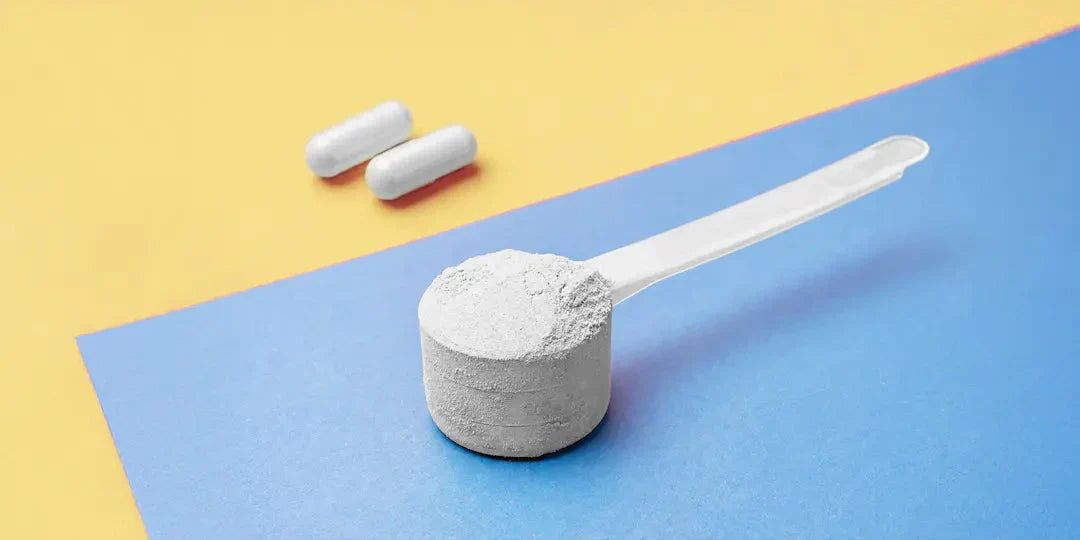
Capsules vs. Powder: Creatine Formats Compared
Once you have decided to take creatine and chosen a form, one practical question remains: powder or capsules? Unlike the debate over creatine forms, this one is refreshingly simple, because the format does not change how well creatine works. What it changes is convenience, cost, and how easily you can stay consistent. This article breaks down the real differences so you can pick the option you will actually keep up with.
This article is educational and is not medical advice. These statements have not been evaluated by the Food and Drug Administration. This product is not intended to diagnose, treat, cure, or prevent any disease. If you are managing a health condition or taking medication, talk with your healthcare provider before starting any supplement.
The Most Important Point First: Both Work
Let us settle the effectiveness question right away. Powder and capsules contain the same active ingredient, and creatine is absorbed almost completely regardless of how you take it. You may read that powder absorbs slightly faster because it is already dissolved while a capsule shell has to break down first. That is technically true, but it is irrelevant in practice. Creatine works through gradual muscle saturation built up over weeks of daily use, not through how quickly a single dose reaches your bloodstream. A difference measured in minutes does not matter for a supplement whose benefits accumulate over weeks.
The International Society of Sports Nutrition position stand supports this broader picture: what matters is reaching and maintaining saturated muscle stores through consistent daily intake. The delivery format is your choice. If you want the fundamentals on how saturation works, our complete guide to creatine.
Where Powder Wins
Cost
Powder is the more economical choice per gram. It involves simpler manufacturing and no encapsulation, so you generally pay less for the same amount of creatine. If cost per serving is your main concern, powder is hard to beat.
Dosing Flexibility
Powder lets you measure any amount you want. That is useful if you want to do a loading phase with larger doses, or if you prefer to dial your dose to your body size. We explain whether loading is worth doing at all in our look at whether you need a loading phase.
Where Capsules Win
Convenience and Portability
Capsules are pre-measured and require no mixing, no scoop, and no shaker. You can keep them in a bag or drawer and take them anywhere without the risk of a powder spill. For travel, work, or simply a busy morning, this is a real advantage.
No Taste or Texture
Some people dislike the slightly gritty texture of monohydrate powder or simply do not want another flavored drink in their day. Capsules remove that entirely. You swallow them with water and move on.
Easier Consistency
This is the quiet advantage that matters most. Creatine only works if you take it every day, and the best format is the one you will not abandon. If measuring and mixing a powder is the small friction that causes you to skip days, capsules can solve that. Consistency beats every other variable.
The Honest Drawback of Capsules
It would be unfair to skip this. Many capsule products contain a relatively small amount of creatine each, which means you may need to swallow several capsules to reach a full daily dose. That can be inconvenient in its own way, and it is part of why capsules often cost more per gram than powder. When comparing capsule products, it is worth checking how many capsules make up a single serving, because that number varies a lot between brands. A product that delivers a meaningful dose in just one or two capsules is far more practical than one that requires five or six.
This is also where the form of creatine interacts with the format. More soluble forms can be delivered efficiently, which we discuss in creatine HCl versus monohydrate. As one example of a low-capsule-count option, FEELGOOD Company's Creatine HCl capsules provide a daily serving in just two capsules, which avoids the handful-of-pills problem that affects some capsule products.
How to Choose
The decision is genuinely about your habits, not your results.
-
Choose powder if you want the lowest cost per serving, you like dosing flexibility, and mixing a drink does not bother you.
-
Choose capsules if you value convenience and portability, you dislike the texture of powder, or pre-measured doses make it easier for you to stay consistent. Just check the serving size so you are not stuck swallowing a large number of pills.
The Bottom Line
Powder and capsules are equally effective, because creatine works through daily saturation rather than the speed of any single dose. Powder is cheaper and more flexible. Capsules are more convenient and, for many people, easier to stick with day after day. The right choice is simply the one that fits your routine well enough that you will take it consistently, because consistency, paired with training, is what actually delivers results.
This article is for educational purposes only and is not a substitute for professional medical advice. These statements have not been evaluated by the Food and Drug Administration. This product is not intended to diagnose, treat, cure, or prevent any disease. Consult your healthcare provider before beginning any new supplement, particularly if you are taking medication or managing a health condition.




Leave a comment
This site is protected by hCaptcha and the hCaptcha Privacy Policy and Terms of Service apply.