

Creatine, Beta-Alanine & Chromium: Why These Three Work Together
Walk through the supplement aisle and you will notice that creatine is often sold on its own, but it also shows up in combination formulas alongside ingredients like beta-alanine and chromium. That raises a fair question: is combining them a real strategy with a rationale behind it, or just more ingredients on a label to look impressive? This article explains what each of these three does, how their mechanisms differ, why pairing them can make sense, and, importantly, where the evidence for each is strong and where it is more limited. The goal is an honest look at the logic of the stack, not a sales pitch.
This article is educational and is not medical advice. These statements have not been evaluated by the Food and Drug Administration. This product is not intended to diagnose, treat, cure, or prevent any disease. If you are managing a health condition or taking medication, talk with your healthcare provider before starting any supplement.
The Idea Behind Combining Ingredients
The logic of a thoughtful stack is that different ingredients work through different mechanisms, so combining them can cover more ground than any single one alone. This only makes sense when each ingredient earns its place and is included at a meaningful dose. A combination is not automatically better than a single ingredient; it is better only when the parts genuinely complement each other. With that standard in mind, here is what each of these three actually does. For the foundational picture on creatine specifically, our complete guide to creatine is the place to start.
Creatine: Fast Energy
Creatine is the most established of the three by a wide margin. It works by helping your muscles rapidly regenerate ATP, the quick-burst energy used during heavy lifts, sprints, and other high-intensity efforts. The International Society of Sports Nutrition position stand describes creatine as the most effective nutritional supplement available for high-intensity exercise capacity and lean mass when combined with training. In a stack, creatine is the anchor: the ingredient with the deepest evidence base behind it.
Its mechanism is about the immediate energy system. That is worth holding onto, because the next ingredient addresses something different entirely.
Beta-Alanine: Buffering Fatigue
Beta-alanine works through a separate pathway, which is exactly why pairing it with creatine has a rationale. During sustained intense effort, acid builds up in working muscles and contributes to that familiar burning fatigue. Beta-alanine raises muscle levels of a compound called carnosine, which acts as a buffer against that acid build-up.
According to the ISSN position stand on beta-alanine, several weeks of consistent beta-alanine supplementation reliably increases muscle carnosine and can improve performance, with the most pronounced effects in efforts lasting roughly one to four minutes. The same review is honest about the limits: the evidence is weaker for pure strength and for endurance efforts beyond about 25 minutes, and the one common side effect is a harmless tingling sensation called paraesthesia. So creatine and beta-alanine are complementary rather than redundant: one helps regenerate fast energy, the other helps delay the fatigue that builds during longer intense efforts. If you want a deeper look at beta-alanine on its own, our existing coverage in FEELGOOD Focus goes further into the research.
Chromium: A Supporting Role, With Honest Limits
Chromium is the ingredient that requires the most careful, honest framing, and we are not going to overstate it. Chromium is a trace mineral that plays a role in how the body uses insulin and processes carbohydrates. In theory, that connects to how efficiently your body fuels and recovers.
So Does the Combination Make Sense?
Putting it together honestly: creatine brings strong, well-established support for strength and high-intensity performance. Beta-alanine adds a genuinely different and reasonably well-supported mechanism for buffering fatigue in sustained intense efforts. Chromium contributes a supporting role in carbohydrate metabolism.
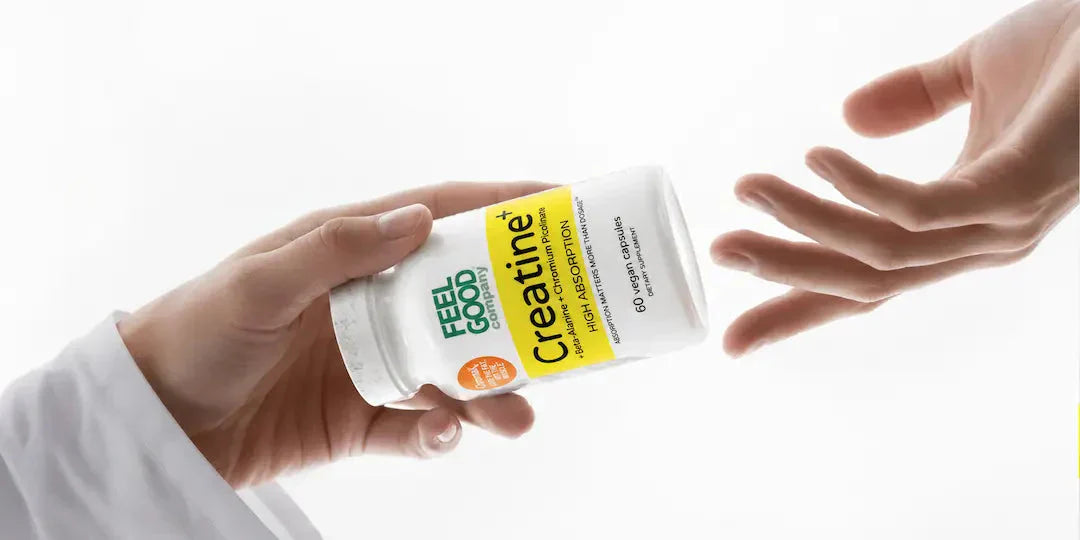
The rationale for combining them is that they target different parts of the training picture rather than duplicating one effect. Whether a combination product is right for you depends on your goals and on whether each ingredient is present at a useful dose. A stack is convenient, since it delivers multiple ingredients in one place, but a stack is only as good as its formulation. As one example of this approach, FEELGOOD Company's Creatine HCl, Beta-Alanine, and Chromium capsules combine all three in a single daily serving, which is one way to take this combined approach without managing separate products. As with any stack, the value comes from consistent daily use alongside training.
The Bottom Line
Combining creatine, beta-alanine, and chromium has a real rationale, because the three work through different mechanisms: fast energy regeneration, fatigue buffering, and a supporting role in carbohydrate metabolism. Creatine is strongly supported and beta-alanine is well supported for specific kinds of effort. A good stack is not about stacking as many ingredients as possible; it is about combining ones that genuinely complement each other at meaningful doses. Understood that way, and paired with consistent training, this combination has a sensible logic behind it.
This article is for educational purposes only and is not a substitute for professional medical advice. These statements have not been evaluated by the Food and Drug Administration. This product is not intended to diagnose, treat, cure, or prevent any disease. Consult your healthcare provider before beginning any new supplement, particularly if you are taking medication or managing a health condition.




Leave a comment
This site is protected by hCaptcha and the hCaptcha Privacy Policy and Terms of Service apply.