

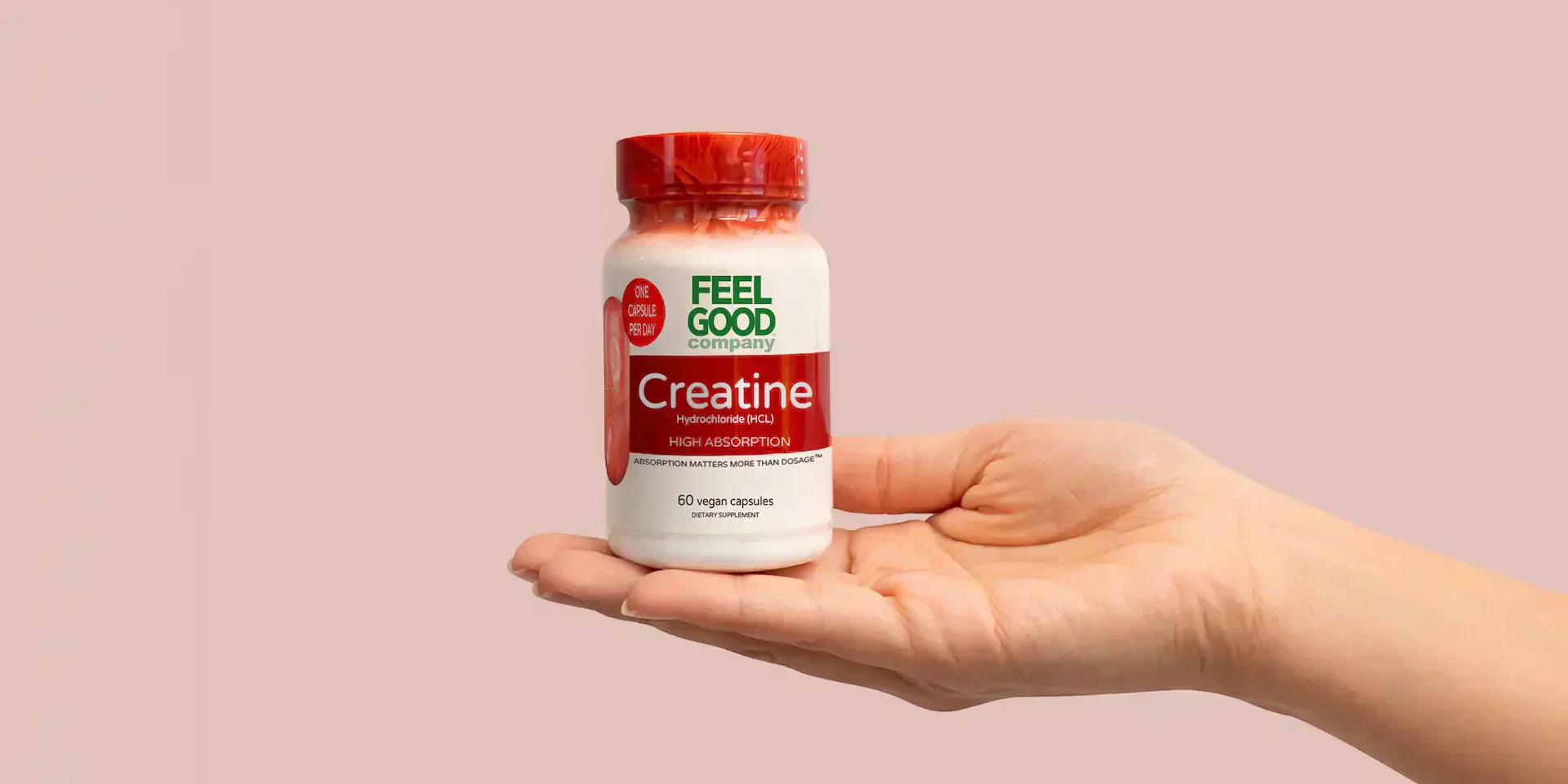
Creatine HCl: What The Research Suggests, How It Compares, And How To Use It
Creatine is one of the most studied performance supplements in the world. Creatine HCl is a newer form that is often marketed as easier to mix, easier to take, and easier on the stomach. The big question is simple: does it work as well as the classic option, and if so, when does it make sense to choose it?
This is educational content, not medical advice. If you are pregnant, under 18, have kidney disease, or take medications, talk to a clinician before starting a creatine routine.
What Creatine HCl Is
Creatine HCl is creatine bound to hydrochloric acid. The purpose of this formulation is usually framed around practical issues like solubility and serving size, not a completely different mechanism.
How It Differs From Creatine Monohydrate
Creatine monohydrate is the standard formulation because it has the deepest research history; however, Creatine HCl is now positioned as:
-
Easier to dissolve in liquid
-
Potentially easier on digestion for some people
-
Smaller serving sizes in capsule formats
If you want the foundational overview first, start with what creatine actually does and how to choose one, then come back here for the specific details.
What The Research Actually Suggests
What We Know From Creatine Research Overall
The strongest and most consistent finding across creatine research is that it helps many people produce more high-quality training work over time. That can show up as:
-
Increased muscular energy: Creatine helps create cellular energy which fuels your muscles
-
Improved muscle recovery: Creatine may help your muscles heal to improve and speed up recovery
-
Increased cellular hydration: Creatine boosts the amount of water in cells to improve hydration and prevent muscle cramps
-
Improved tissue growth and repair: Creatine increases hormones like estrogen, testosterone, insulin, and growth hormones which can help repair tissues
Those small improvements matter because they compound across weeks and months. Creatine is not a stimulant. If you judge it by whether you “feel it,” you will miss the point.
What We Know Specifically About Creatine HCl
Compared to monohydrate, creatine HCl has far less independent research. That does not mean it is ineffective. It means the evidence base is smaller, and the best supported claims tend to be about practicality, not superiority.
For a long time, creatine monohydrate has been the gold standard for creatine users, with a large amount of evidence to support its efficacy and a friendly price tag. However, new research may be revealing that creatine HCl is more soluble, easier to digest, and thus more effective.
Two realistic expectations, though:
-
If creatine HCl helps you take creatine consistently, that consistency may be the real advantage.
-
If you tolerate it better than monohydrate, that can be meaningful, even if performance outcomes are similar.
This is also where absorption and form discussions matter. If you want a simple refresher on why formulations can behave differently in real life, review why not all supplements work the same.
Creatine HCl Vs Monohydrate
Effectiveness For Strength And Performance
For most people, the deciding factor is not “which form is stronger.” It is whether you actually take it daily and whether it fits your routine. Creatine outcomes are driven by long-term consistency, not perfect timing.
If you have never used creatine, monohydrate is usually the default starting point because it is the most validated. Creatine HCl becomes more interesting when convenience and tolerance determine whether you can actually stick with it.
Dosing Differences And Convenience
Monohydrate is commonly taken as a simple daily dose. Creatine HCl is often used in smaller amounts, frequently in capsules, which some people prefer because it is easy and travel-friendly.
If you want to see a straightforward capsule format example, Creatine HCl capsules are one option that removes the friction of mixing powders.
Tolerability And Stomach Comfort
Some people experience GI discomfort with creatine, especially if they take a large dose at once or take it without food. If you are in that group, you have a few options:
-
Split the dose
-
Take it with meals
-
Reduce the dose and build up slowly
-
Try a different form
If you want a powerful performance stack in one convenient capsule, Creatine + w/Beta-Alanine and Chromium Picolinate simplifies your routine by combining key ingredients into a single formula. This reduces the number of products you need to manage, though it offers less flexibility to adjust each ingredient separately.
How To Use Creatine HCl
Typical Dosing Approach
The simplest approach is daily use. Most creatine routines, like all routines, work because they are consistent.
A practical rule that works for most people:
-
Choose a daily dose you can sustain
-
Take it the same time each day
-
Avoid skipping days because you are overthinking timing
If the serving size on your product is small enough to be effortless, that alone can increase consistency.
Timing With Meals Or Training
Currently, research is unclear on the exact time creatine should be taken everyday, but what matters more than timing is adherence.
Three easy options:
-
Take it with your first meal
-
Take it before or after training: Current research shows this may be the most effective approach on workout days
-
Take it with your evening meal
If you are prone to stomach discomfort, taking it with food or in a smoothie is often the best option.
Hydration also matters more than most people expect. If your training volume is high or you live in a dry climate, consistent fluids and electrolytes can improve how you feel during training. If you want simple options to support that foundation, browse hydration supplements and treat them as a support tool, not a replacement for drinking enough water.
How Long To Use Before Judging Results
Give it time. Creatine is not an “instant” supplement.
A fair evaluation window is:
-
At least 3 to 4 weeks of daily use
-
Consistent training during that period
-
One or two performance metrics tracked weekly
Good metrics are simple:
-
Reps at a fixed weight
-
Total volume completed
-
Repeat sprint output
-
How long you maintain pace during intervals
-
How your body feels after a hard workout
Who Benefits Most
Strength And Power Training
If your training includes heavy sets, repeated bouts, and progressive overload, creatine is one of the most reasonable supplements to consider. The benefit often looks like slightly better training quality, which compounds.
People Who Struggle With Monohydrate
If monohydrate causes GI issues or you hate mixing powders, creatine HCl can be a practical alternative. Convenience is not a minor detail. It is often the difference between “I tried it” and “I actually did it consistently.”
Athletes Who Want Simple Daily Compliance
If your routine already has enough moving parts, the best supplement is often the one you can take without friction. Capsule formats are boring in the best way.
Safety And When To Talk To A Clinician
Common Side Effects
Creatine is generally well tolerated, but common issues include:
-
Mild GI discomfort
-
Water retention and scale weight changes (weight increase is often the result of increased lean muscle mass, a good thing!)
-
Cramping concerns, often more related to hydration and training load than creatine itself
If you want to support sleep and muscle relaxation as part of a broader recovery routine, some people find magnesium useful, especially if intake is low. A capsule example is magnesium glycinate, which is often chosen for tolerability.
Who Should Use Caution
Talk to a clinician before using creatine if you:
-
Have kidney disease or reduced kidney function
-
Are pregnant or nursing
-
Are under 18
-
Take medications that affect kidney function or fluid balance
If you have any medical condition where hydration status matters, treat supplements as a clinical conversation, not a casual experiment.
Practical Takeaways
Quick Checklist For Deciding If It Is Worth Trying
Use this checklist to decide quickly:
-
You train at least 3 days per week and want better performance consistency.
-
You have at least one simple metric you will track for 4 weeks.
-
You can commit to daily use without overthinking timing.
-
You understand that results are subtle but compounding.
-
You will talk to a clinician if you have medical conditions or take medications.
If you want the simplest version of creatine success, it is this: pick a form you will take daily, track one performance outcome, and stay consistent long enough to judge it fairly.

Leave a comment
This site is protected by hCaptcha and the hCaptcha Privacy Policy and Terms of Service apply.