

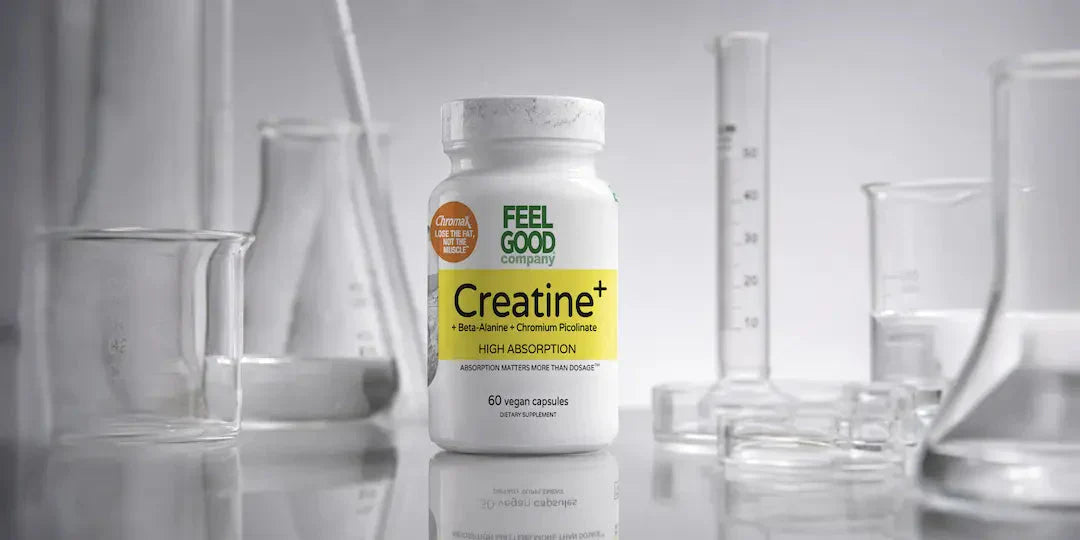
Creatine HCl vs. Monohydrate: Bloating, Loading, and Digestion
If you have decided to start creatine, the next question is usually which form to buy. The two you will see most often are creatine monohydrate, the original and most researched form, and creatine hydrochloride, usually written as creatine HCl. Supplement marketing often presents HCl as the clear upgrade. The research tells a more measured story. This article compares the two honestly, including where HCl genuinely has an edge, where the claims outrun the evidence, and how to decide which one fits you.
This article is educational and is not medical advice. These statements have not been evaluated by the Food and Drug Administration. This product is not intended to diagnose, treat, cure, or prevent any disease. If you are managing a health condition or taking medication, talk with your healthcare provider before starting any supplement.
Start With What They Have in Common
Both forms deliver creatine to your muscles, where it supports the rapid energy production behind strength and high-intensity efforts. The underlying compound doing the work is the same. The differences come down to how the creatine is bound, which affects solubility and, for some people, digestive comfort. If you want a refresher on what creatine does in the body before comparing forms, our complete guide to creatine covers the fundamentals.
What the Research Actually Says About Results
This is the part that matters most and the part marketing tends to distort. The honest summary is that the two forms appear to work about equally well for strength.
A 2015 study comparing the two forms in recreational weightlifters found that both creatine HCl and creatine monohydrate improved upper and lower body strength after several weeks of resistance training. More recently, a 2025 randomized controlled trial in the Journal of the International Society of Sports Nutrition directly compared low doses of both forms in athletes and found no statistically significant differences between them on strength and neuromuscular performance. The authors went a step further and stated plainly that claims of HCl being superior are not supported by their findings.
So if you see a product claiming creatine HCl delivers dramatically better strength or muscle results than monohydrate, treat that with skepticism. The current evidence does not back it up. Monohydrate also remains the most studied form by a wide margin, which is why the International Society of Sports Nutrition position stand describes monohydrate as the most effective and well-validated form available.
Where Creatine HCl Genuinely Differs
If results are similar, why does HCl exist at all? The real differences are about solubility and comfort, not performance.
Solubility
Creatine HCl is considerably more soluble in water than monohydrate. Monohydrate can leave a gritty residue at the bottom of a glass, while HCl dissolves more completely. This is a real, measurable property, not a marketing claim.
Digestive Comfort and Bloating
This is the most practically meaningful difference for many people. A subset of users experience mild bloating, water retention, or stomach discomfort with monohydrate, particularly during a high-dose loading phase. Because HCl is more soluble and is often taken at a smaller volume, some people find it sits more comfortably. It is worth being precise here: the evidence for better digestive tolerance is more anecdotal and mechanistic than proven in large trials, so it is best described as something many people report rather than something definitively established. If monohydrate has never bothered your stomach, this difference may not matter to you at all.
It is also worth knowing that for monohydrate users who do get discomfort, simply lowering the dose and skipping the loading phase often resolves it, which we explain in our breakdown of whether you need a loading phase.
The Loading Phase Question
Loading is the practice of taking a large daily dose for the first week to saturate your muscles faster. It is associated more with traditional monohydrate routines, and it is also the phase where digestive complaints are most common. The key thing to understand is that loading is optional with either form. A steady daily dose reaches the same saturation over a few weeks. Skipping loading is one of the simplest ways to avoid the discomfort that drives some people toward HCl in the first place.
Cost and Practicality
Monohydrate is the more affordable option per gram and has the deepest research base, which makes it a sensible default for most people. Creatine HCl typically costs more. What you are paying for is solubility and, for some, a more comfortable experience, rather than better results. Whether that tradeoff is worth it depends entirely on your own digestion and preferences. For a closer look at the powder-versus-capsule side of this decision, see capsules versus powder, and for the HCl-specific research in more depth, our overview of what the research suggests about creatine HCl goes further.
How to Decide
Here is a straightforward way to think about it.
-
Choose monohydrate if you want the most-researched, most affordable option and you tolerate it without digestive issues. For most people, this is a perfectly good choice.
-
Consider HCl if you have experienced bloating or stomach discomfort with monohydrate, you dislike grit in your drink, or you simply prefer a more soluble form and do not mind paying more for it.
Neither choice is a mistake. The most important factor, by a wide margin, is taking creatine consistently every day, regardless of form. As one example of an HCl option, FEELGOOD Company's Creatine HCl capsules deliver a daily serving in two capsules with no loading phase, which suits people who want the soluble form without measuring powder.
The Bottom Line
For strength and performance, creatine HCl and monohydrate are effectively a tie, and any claim that HCl is dramatically more effective runs ahead of the evidence. Where HCl genuinely differs is solubility and, for some people, digestive comfort. Monohydrate is cheaper and more studied. HCl is more soluble and may feel gentler for those prone to bloating. Pick the one that fits your body and budget, then take it every day. That consistency matters far more than which form you chose.
This article is for educational purposes only and is not a substitute for professional medical advice. These statements have not been evaluated by the Food and Drug Administration. This product is not intended to diagnose, treat, cure, or prevent any disease. Consult your healthcare provider before beginning any new supplement, particularly if you are taking medication or managing a health condition.



Leave a comment
This site is protected by hCaptcha and the hCaptcha Privacy Policy and Terms of Service apply.