

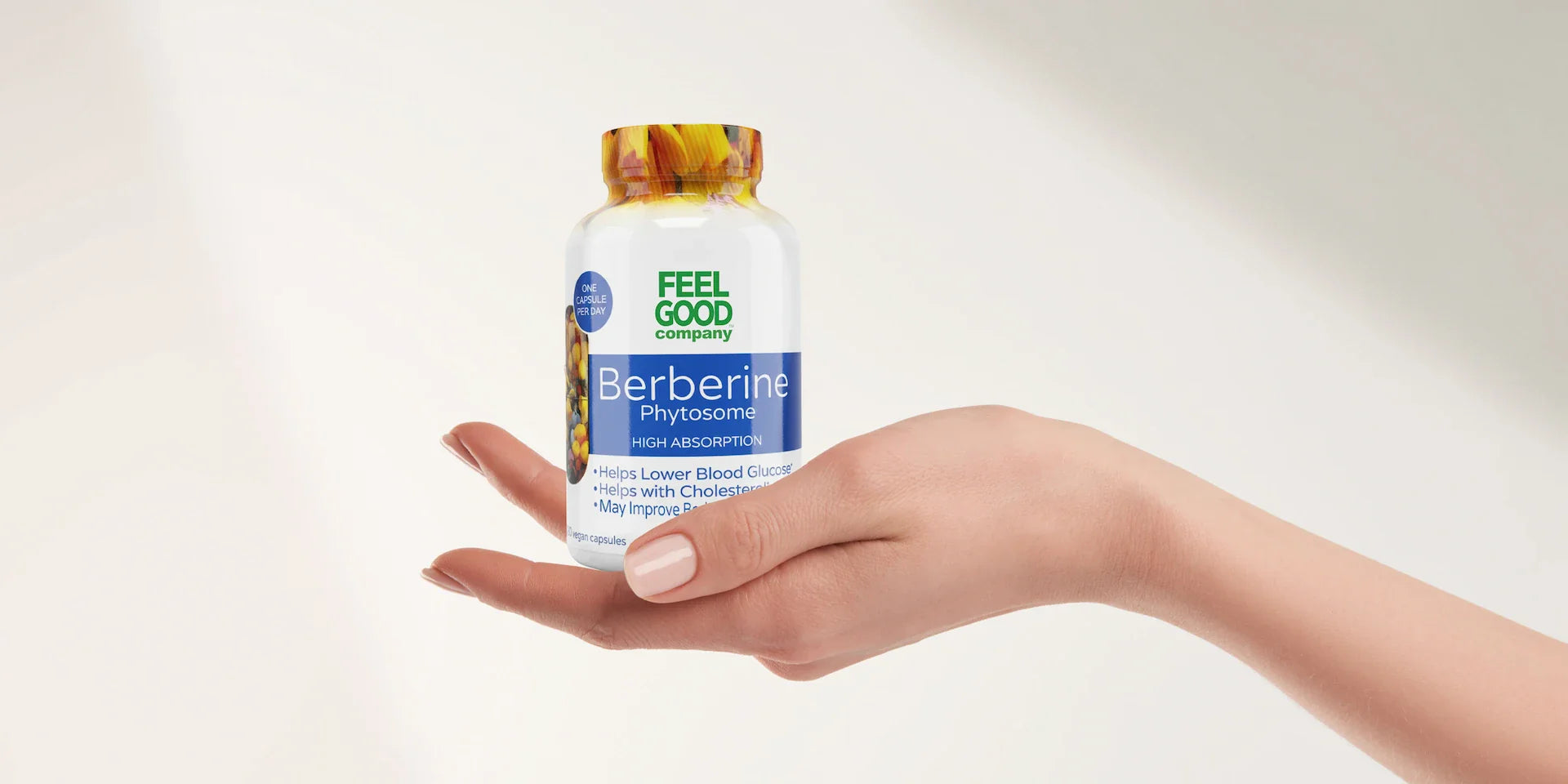
Berberine: Mechanisms, Clinical Evidence, Dosing Considerations, and Safety
Berberine is one of the most discussed supplements when it comes to metabolic health, as it shows up in research on glucose (blood sugar) regulation and lipid (fat) markers. It can be a useful tool for the right person, but it’s also one of those supplements that requires a little more consideration than “I’ll just try it,” especially if other medications are in the mix.
This guide is educational, not medical advice. If you’re pregnant, breastfeeding, trying to conceive, managing diabetes, or taking prescription medications, treat berberine as something to review with your healthcare provider before starting.
What Berberine Is and Why It’s Used
Berberine is a plant-derived compound found in several botanicals. Most people use it for metabolic support when their goals involve steadier glucose patterns, improved appetite control, or better cardiometabolic (health) markers.
The simplest way to frame it: berberine can support the plan, but it can’t replace the plan. If your meals are inconsistent, sleep is chaotic, and movement is sporadic, you’ll want to tighten up those basics first, then decide whether targeted support, like berberine, makes sense.
Primary Use Cases: Glucose, Lipids, and Metabolic Support
Most real-world use cases land in three buckets:
-
Glucose support: steadier post-meal responses and improved long-term blood glucose markers for some people
-
Lipid support: improvements in triglycerides and LDL (cholesterol levels) in some study contexts
-
Metabolic support overall: the overlap of glucose, appetite, and energy stability
Mechanisms of Action
Mechanisms help you set expectations and understand what you are taking. Berberine tends to influence multiple pathways in your body that are related to fuel handling and metabolic signaling, rather than acting like one single “switch.”
AMPK and Glucose Transport
One of the most commonly discussed pathways when it comes to berberine relates to the enzyme AMPK or AMP-activated protein kinase.
Let’s break that down in simpler terms. AMPK is an enzyme, or a protein in the body that makes chemical reactions possible. This specific enzyme is often described as a cellular energy sensor. It is able to sense when cellular energy is low and slow down processes that might use energy, and vice versa, sensing high energy and utilizing that energy.
When it comes to glucose handling and metabolic regulation, AMPK can activate pathways to burn sugars and fats or it can suppress pathways to allow for the building of fats and proteins.
Now, why is berberine studied in the context of AMPK-related signaling? Because berberine can activate AMPK to boost metabolism and improve glucose control. This does not mean everyone will respond the same way, but it explains why glucose outcomes are frequently measured in trials.
Effects on Lipid Metabolism
Berberine is also studied for its relationship to lipid metabolism, which is why it’s often discussed in the same breath as triglycerides and LDL. Working with AMPK and LDL receptors, berberine may help to reduce bad cholesterol levels and manage metabolism of fats. If your “why” includes lipid markers, it’s smart to pair any supplement plan with foundational habits and broader cardio support.
Some people layer in basics like an omega-3 as part of an overall cardiometabolic routine, especially if they’re already working on meal structure and consistency.
Gut-Mediated Effects and Inflammation Signaling
Berberine is also discussed in relation to gut-mediated effects and inflammatory signaling. It may help to regulate the intestinal microbiome of humans, encouraging growth of good bacteria and stopping bad bacteria. This process can also help to reduce inflammation in the gut.
GI tolerability is one of the more common reasons people stop taking berberine, but with products like this that prioritize absorption, this supplement may be better tolerated. If your digestion is already sensitive, it can be helpful to prioritize gut basics first (consistent meals, fiber, hydration), and only then experiment with berberine.
If you’re specifically looking at microbiome-style support alongside metabolic goals, some people prefer a single-product option like a gut health & digestion supplement as a “keep it simple” approach.
What the Clinical Evidence Suggests
Berberine research includes a mix of small trials and reviews across different populations. Results vary based on baseline health status, study duration, formulation, and what else participants are doing with their diet and activity.
Outcomes for A1C and Fasting Glucose
In many studies, berberine is evaluated by changes in long-term glucose markers (like A1C) and fasting blood glucose, showing reductions in both in many trials. The pattern you’ll see repeated is that outcomes tend to be more meaningful when the person also has a consistent nutrition routine and isn’t relying on berberine as the only lever.
Outcomes for Triglycerides and LDL
Berberine is also studied for effects on lipid markers, particularly triglycerides and LDL, which helps explain why it shows up in broader cardiometabolic conversations. Studies are revealing that berberine may successfully lower these cholesterol levels. If lipids are part of your goal, it’s usually worth treating berberine as one layer, not the whole strategy, and pairing it with the kind of baseline habits that can help move these numbers long-term.
Strength of Evidence and Common Study Limitations
A few limitations show up often:
-
Many studies are relatively short (weeks to a few months)
-
Formulations and dosing patterns vary
-
Participant health status differs across trials
-
Lifestyle factors are not always controlled consistently
That’s why the most practical mindset is: Berberine may support your efforts, but it won’t override inconsistent meals, poor sleep, or low activity.
Dosing and How to Take It
This is where many people get stumped: How much do I take? When do I take it? How do I take it safely for best absorption?
Typical Ranges Used in Studies
Study and product doses vary, with most suggesting between 900 and 1500 mg per day for best results. Consistently, many protocols use divided dosing across the day (rather than one big dose).
Instead of treating the number as the point, treat the pattern as the point: consistent, divided, and taken with food tends to be the approach people tolerate best. Ensure you are buying products that have been tested, and follow the serving guidelines on the labels, again speak to your provider if you have any questions or concerns.
Timing With Meals and Titration
A practical approach that usually goes better:
-
Take it with meals (not on an empty stomach)
-
Start with a lower dose or lower frequency
-
Increase gradually if you’re tolerating it well
If your baseline diet is unstructured, berberine timing won’t save it. In that case, you’ll get more leverage from making meals more reliable first, especially protein and fiber.
How Long It May Take to See Changes
Some people notice appetite and post-meal steadiness earlier, but long-term markers like A1C inherently take longer to shift. Most meaningful changes require consistent habits over weeks to months, not days.
If you’re the type who does best with simple systems, getting meal prep and repetition right is often the difference between “this worked” and “I forgot to take it half the time,” which is why this guide pairs surprisingly well with any supplement strategy.
Safety and Interactions
Berberine is bioactive. “Natural” doesn’t mean “no considerations.”
Common Side Effects and How to Reduce Them
Most commonly reported issues are GI-related (bloating, cramping, constipation or loose stools). The best ways to reduce these:
-
Take with meals
-
Start lower and ramp up slowly
-
Avoid stacking multiple new supplements at once (this will help you identify the root cause of any side effects that may occur)
If digestion is the limiting factor, it may be more productive to stabilize the gut first with routine, and only then experiment. That’s where supplements for gut health and digestion can be relevant, depending on your needs.
Contraindications and Who Should Avoid It
Berberine is not something to self-start if you are pregnant, breastfeeding, or trying to conceive. It’s also something to be cautious with if you have complex medical conditions or a medication regimen where small changes matter.
Medication Interactions to Discuss With a Clinician
If you’re taking medications that affect blood sugar, blood pressure, or blood clotting, or you’re on multiple prescriptions, berberine should be a “discuss first” supplement.
In particular, if you’re on glucose-lowering medications, you need to know how to monitor your blood sugar and the hypoglycemia risk. The safest approach is to bring your full medication and supplement list to a clinician and treat berberine cautiously before starting.
Practical Takeaways
When Berberine Is Reasonable to Consider
Berberine tends to be a reasonable consideration when:
-
Your meals are trending towards consistent and protein-forward
-
You’re moving regularly (even short post-meal walks)
-
You want targeted support for glucose patterns and/or lipid markers
-
You can monitor how you respond (and ideally confirm with labs over time)
If you like to compare options by outcome before you commit, you can view our range of supplements for metabolism and weight control.
When to Prioritize Lifestyle or Alternatives First
Berberine usually shouldn’t be the first move if:
-
Sleep is inconsistent and cravings are clearly sleep-driven
-
Meals are low-protein and low-fiber most days
-
Stress is high enough that consistency is the bottleneck
-
You’re on multiple medications and can’t monitor carefully
In those cases, the biggest immediate wins usually come from working on your daily routine first. Some people also find a simple nightly routine works better when it includes something like magnesium glycinate, especially when paired with consistent bedtime and lower evening stimulation.



%20regulation%20and%20lipid%20(fat)%20markers.%20It%20can%20be%20a%20useful%20tool...)
Leave a comment
This site is protected by hCaptcha and the hCaptcha Privacy Policy and Terms of Service apply.